Retail & SouvenirsBy Souvees
12 Hotel Gift Shop Merchandise Ideas That Guests Actually Want to Buy
From collectible bag charms to locally inspired keepsakes, discover fresh hotel gift shop merchandise ideas that turn a quick browse into a memorable purchase.
The hotel gift shop is getting a much-needed upgrade.
Gone are the days when a few logo T-shirts, refrigerator magnets, and generic postcards were enough to fill the shelves. Today's guests have plenty of shopping options, and a hotel gift shop needs to offer something worth their attention.
The opportunity? Merchandise that captures the personality of a property, appeals to guests beyond basic necessity, and feels like something they'd genuinely want to own.
Whether you're merchandising a luxury resort boutique, a destination hotel shop, or a small lobby retail space, the right assortment can turn everyday foot traffic into incremental revenue.
Here are 12 hotel gift shop merchandise ideas worth considering for your next assortment refresh.
1. Collectible Plush Bag Charms
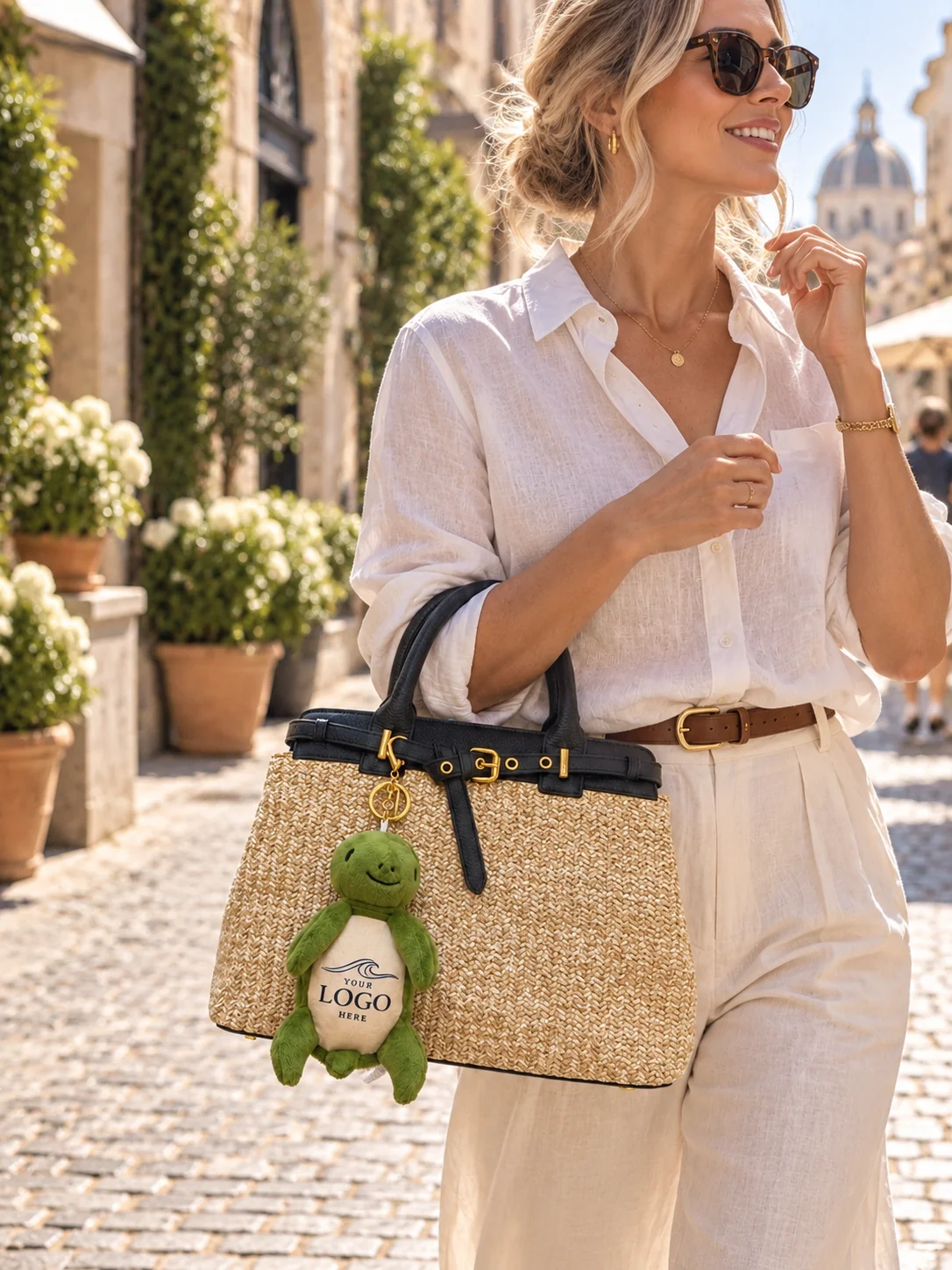
Small, playful, and designed to travel, plush bag charms offer an alternative to traditional hotel souvenirs.
These soft, collectible accessories can be clipped onto handbags, backpacks, luggage, and totes, giving guests a way to carry a reminder of their stay long after checkout.
Unlike a standard logo keychain, a well-designed plush bag charm starts with an appealing character or shape. The hotel's branding becomes part of the product rather than its only reason to exist.
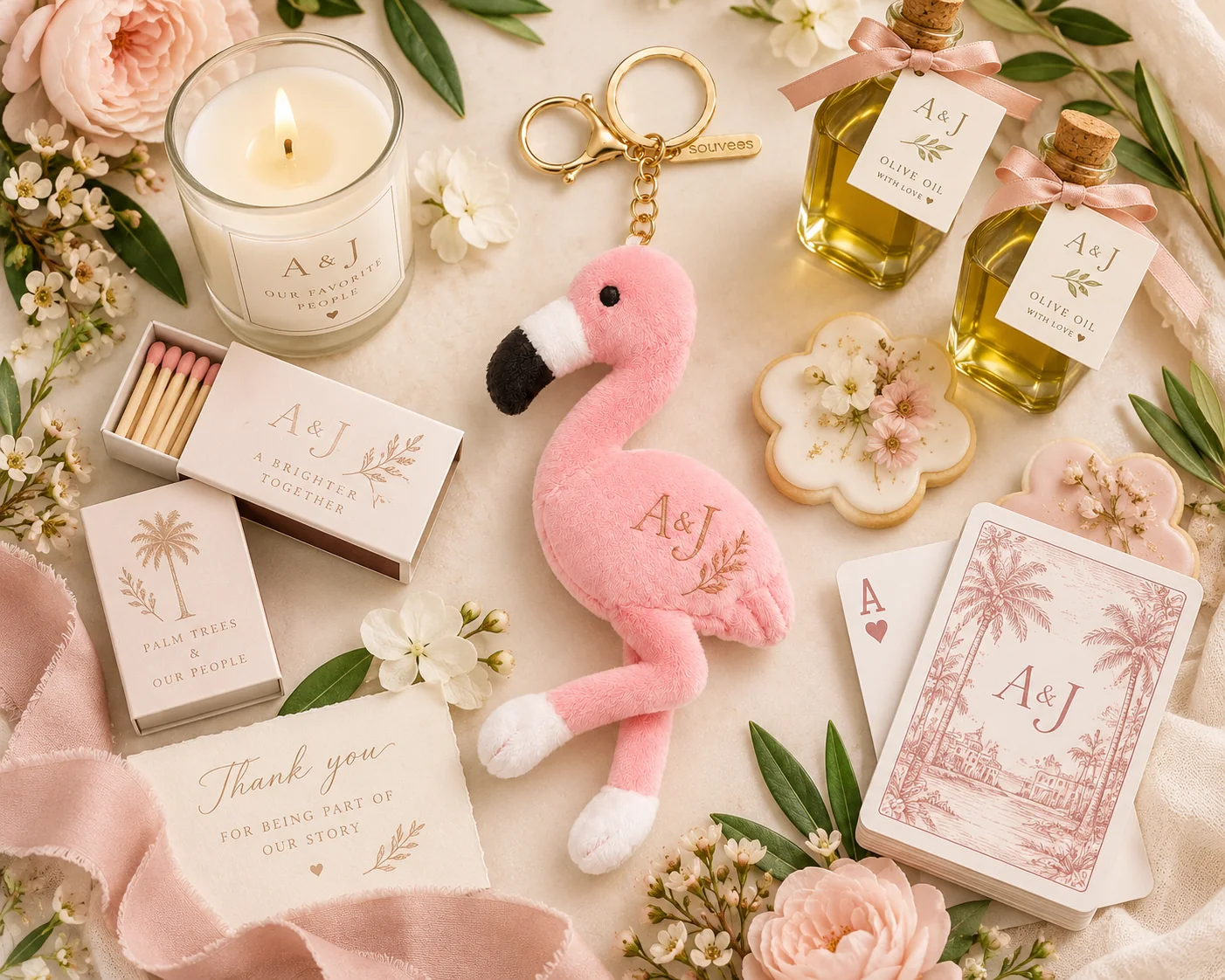
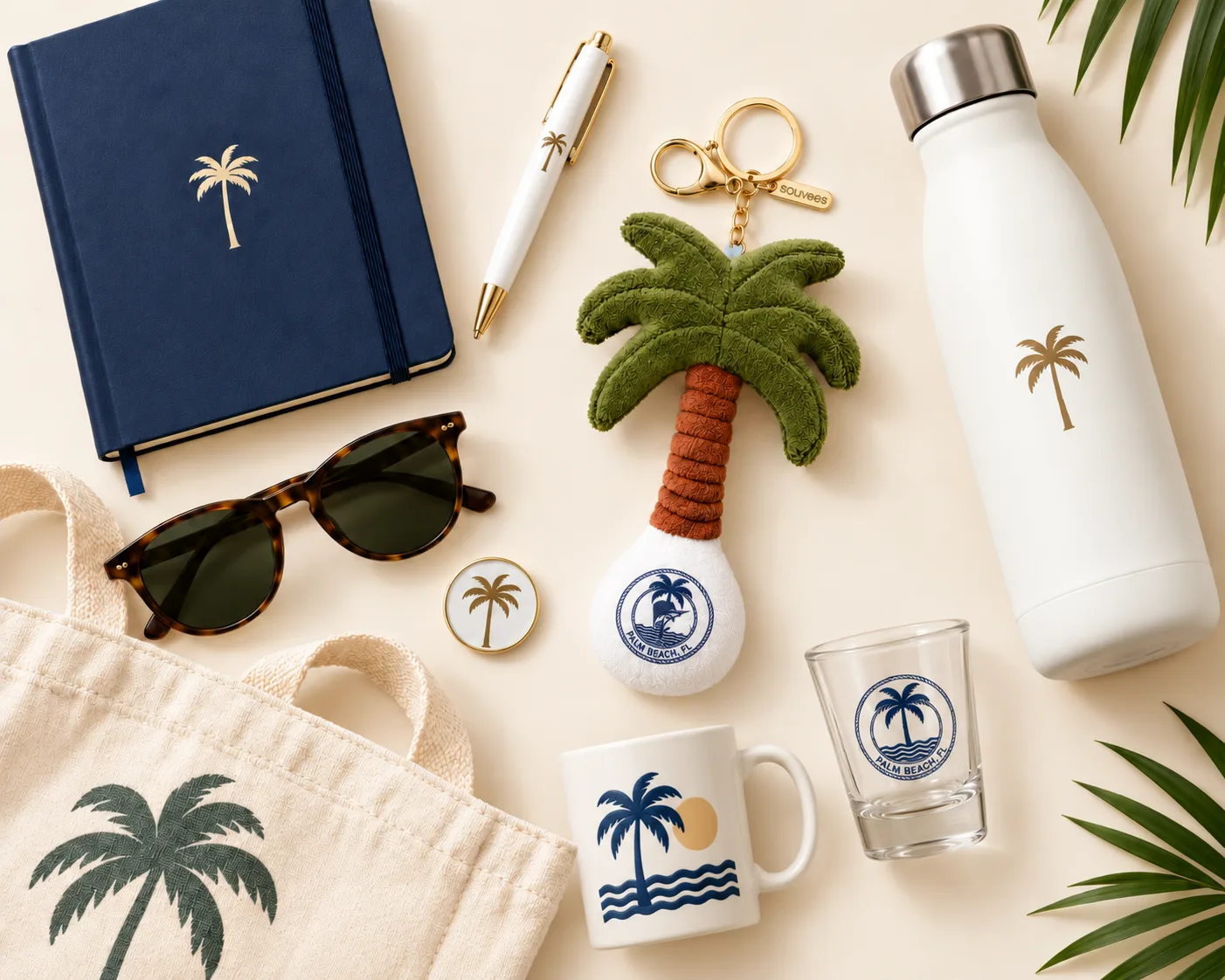
Think tropical flamingos for a beachfront property, sea turtles for a coastal resort, or teddy bears for a classic destination hotel.
Why they deserve shelf space: Collectible designs offer visual variety, gifting potential, and opportunities for repeat purchases.
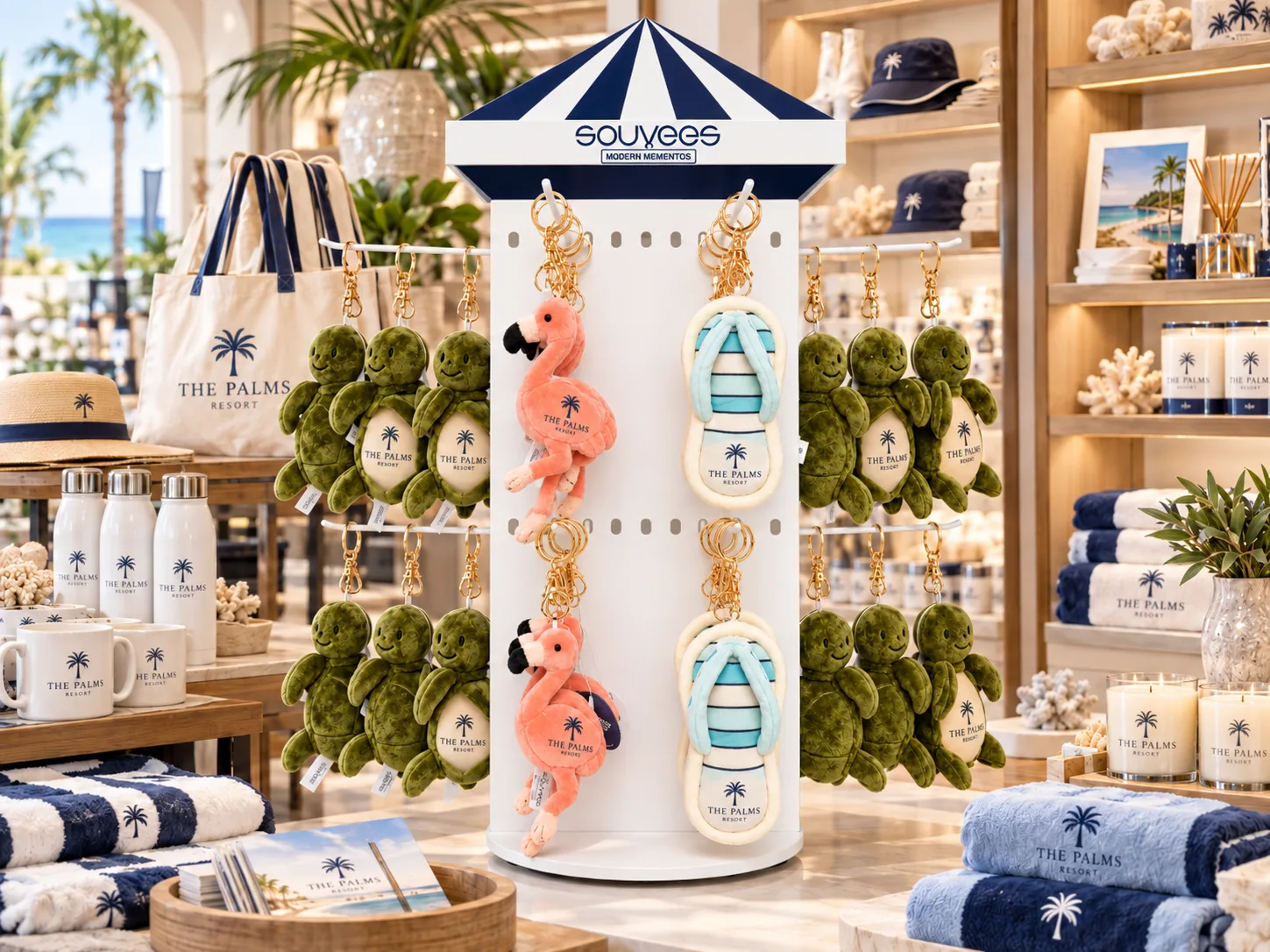
Merchandising tip: Display several designs together near checkout or alongside handbags and travel accessories. Let the assortment invite guests to discover their favorite.
The Souvees approach: Souvees creates collectible plush bag charms that hotels can personalize with their own logos. Existing designs are available starting at just 10 pieces per design, making it easier to introduce a small assortment before expanding.
2. Destination-Inspired Tote Bags
A thoughtfully designed tote bag can be both a useful travel accessory and a reminder of a favorite destination.
The key is creating something guests would purchase even without the hotel's name attached.
Consider original illustrations, understated typography, distinctive color palettes, or artwork inspired by the surrounding landscape.
A destination-inspired tote offers an alternative to the typical oversized-logo canvas bag.
Why they deserve shelf space: Practical use, perceived value, and appeal beyond the hotel stay.
Merchandising tip: Display totes open and filled with complementary accessories rather than stacked flat on a shelf.
3. Signature-Scent Candles
Scent can be a powerful reminder of a place.
For hotels with distinctive lobby fragrances or spa experiences, candles and home fragrances offer guests a way to bring part of that atmosphere home.
Even properties without a signature scent can develop a collection inspired by the destination, such as coastal botanicals, citrus groves, tropical flowers, or warm woods.
Why they deserve shelf space: Giftability, emotional connection, and a natural connection to hospitality.
Merchandising tip: Create a dedicated fragrance display with testers, consistent packaging, and a short description of each scent.
4. Locally Made Artisan Products
A hotel gift shop should feel connected to where it is.
Locally made ceramics, jewelry, small artwork, textiles, and handcrafted goods give visitors access to products they might not find elsewhere.
They also create opportunities to support local makers and tell meaningful stories about the surrounding community.
Why they deserve shelf space: Destination relevance, authenticity, and product differentiation.
Merchandising tip: Include concise maker stories and highlight the connection between the product and the destination.
5. Elevated Hotel-Branded Apparel
Logo apparel still has a place in hotel retail. It just needs to be more considered.
The strongest pieces feel like clothing guests would choose on their own, rather than uniforms advertising where they stayed.
Think quality T-shirts, relaxed sweatshirts, embroidered caps, and restrained graphics inspired by the property's architecture, history, or location.
Why they deserve shelf space: Familiarity, practical use, and opportunities for higher-value purchases.
Merchandising tip: Show complete outfits or styled combinations rather than relying exclusively on folded stacks.
6. Personalized Travel Accessories
Travel-related merchandise is a natural fit for hotel retail.
Luggage tags, passport holders, travel pouches, compact organizers, and decorative bag accessories appeal to customers who are already in a travel mindset.
The best options strike a balance between functionality and distinctive design.
Why they deserve shelf space: Relevance to travel, gifting potential, and opportunities to complement other purchases.
Merchandising tip: Group small travel accessories together to encourage add-on purchases.
7. Premium Reusable Drinkware
Water bottles, tumblers, and insulated cups remain practical retail categories, especially at destinations where guests spend significant time outdoors.
But practicality alone doesn't guarantee a purchase.
Consider distinctive colors, appealing silhouettes, and destination-specific artwork rather than defaulting to a generic logo application.
Why they deserve shelf space: Everyday utility and opportunities for functional souvenirs.
Merchandising tip: Limit overlapping styles. A few well-chosen options can make a more compelling presentation than a crowded wall of similar bottles.
8. Children's Collectibles and Keepsakes
Families often shop differently from couples and solo travelers.
A child may remember the turtle they saw near the beach, the animal associated with a destination, or the souvenir they chose themselves.
Plush toys, small collectibles, illustrated books, and destination-themed accessories can turn those memories into retail opportunities.
Why they deserve shelf space: Gifting appeal, emotional connection, and suitability for family-oriented destinations.
Merchandising tip: Create a visually engaging collection at an accessible display height while keeping the overall presentation consistent with the hotel's retail aesthetic.
9. Destination-Inspired Jewelry and Accessories
Small accessories offer an approachable way to purchase something special without committing to a larger item.
Consider enamel pins, bracelets, earrings, scarves, and charms inspired by a hotel's setting or identity.
These products work particularly well when their design feels fashionable first and souvenir-driven second.
Why they deserve shelf space: Compact presentation, giftability, and broad styling possibilities.
Merchandising tip: Display products by material, color, or theme to create a curated appearance rather than a conventional souvenir rack.
10. Specialty Food and Beverage Gifts
Guests often enjoy taking home a taste of their destination.
Locally roasted coffee, artisanal chocolates, specialty teas, preserves, and regional snacks can make appealing purchases, particularly when packaging feels appropriate for gifting.
Products connected to a hotel's culinary identity can be especially relevant.
Why they deserve shelf space: Immediate enjoyment, gifting appeal, and destination authenticity.
Merchandising tip: Offer a combination of individual treats and curated gift sets. Account for shelf life, storage requirements, and breakage when choosing products.
11. Artist-Designed Stationery and Home Goods
Postcards and magnets aren't inherently bad merchandise. Generic design is the bigger problem.
A custom illustration of a hotel's architecture, a beautifully rendered destination map, or artwork inspired by local flora and fauna can transform familiar categories into desirable keepsakes.
Consider notebooks, small prints, ceramics, coasters, and stationery featuring original artwork.
Why they deserve shelf space: Storytelling, decorative appeal, and clear ties to a destination.
Merchandising tip: Show the complete collection together to encourage customers to consider multiple coordinating items.
12. Small, Curated Collectible Collections
Sometimes the biggest opportunity isn't introducing an entirely new product category. It's making the assortment feel like a collection.
A hotel could develop a coordinated group of small accessories inspired by its destination, with different characters, colors, or seasonal variations.
A coastal property might feature a sea turtle, flamingo, and palm tree. A mountain destination could take inspiration from local wildlife and scenery.
The designs don't necessarily need to be exclusive to a specific hotel to become meaningful. Thoughtful customization and presentation can connect an existing product collection to the property's identity.
Why they deserve shelf space: Visual merchandising impact, opportunities for assortment refreshes, and the potential for collecting and gifting.
Merchandising tip: Create a dedicated display that encourages guests to browse the full assortment rather than scattering individual products throughout the shop.
How to Choose Hotel Gift Shop Merchandise That Actually Sells
Finding interesting merchandise is only half the job. The real challenge is building an assortment that performs commercially.
Here are five considerations every hotel retail buyer should evaluate.
1. Prioritize products with immediate appeal
Hotel guests aren't always planning to shop.
Products that communicate their appeal quickly through shape, color, texture, or presentation have an advantage in spaces where customers may only browse for a few minutes.
Look for items that don't require a lengthy explanation to understand.
2. Know your retail margin
A distinctive product still needs to make financial sense.
Evaluate the landed cost, expected retail price, gross margin, freight, and any display or packaging expenses.
For example, a product with a $14 landed cost and a $28 retail price generates a 50% gross margin before other operating expenses.
That doesn't automatically make it the right product, but it gives you a starting point for evaluating the opportunity.
3. Test new categories without overcommitting
One of the biggest obstacles to introducing new merchandise is inventory risk.
When evaluating suppliers, look at minimum orders, customization requirements, production timelines, and the flexibility to replenish successful designs.
Smaller initial commitments can make testing a new category more manageable.
4. Merchandise collections, not just individual products
A coordinated group of products often tells a stronger visual story than unrelated items scattered across shelves.
Group merchandise by theme, guest interest, or destination experience.
For example, a coastal display might combine plush bag charms, illustrated totes, locally made accessories, and complementary travel products.
The goal is to make the assortment feel intentional.
5. Build reorders into your strategy
An opening order is only the beginning.
Track which products sell, how quickly they move, and which designs deserve additional inventory.
For smaller items, monitor units sold per week and weeks of supply. This can help you make replenishment decisions before popular styles disappear from the shelves.
The most successful assortment isn't necessarily the largest. It's the one that consistently earns its space.
What Are the Best-Selling Items in Hotel Gift Shops?
There isn't a universal answer.
The strongest categories depend on the property's location, guest profile, price positioning, retail footprint, and the types of experiences guests associate with the destination.
Apparel, accessories, snacks, travel essentials, locally inspired gifts, and souvenirs are all established hotel retail categories.
But the real question isn't simply what sells in hotel gift shops generally.
It's what will your guests want to buy from your property?
A beachfront resort with a strong leisure audience may succeed with playful accessories and destination-inspired merchandise. An urban luxury hotel may lean more heavily into sophisticated lifestyle products and design-led gifts.
Use your sales data, guest feedback, and assortment performance to guide future purchases.
How Can Hotels Make Their Gift Shops More Profitable?
Start by treating the gift shop as a retail business rather than simply an amenity.
Focus on a few practical improvements:
- Differentiate the assortment. Offer products guests won't find in every nearby store.
- Use space strategically. Give high-interest items visible placement and avoid overcrowded displays.
- Balance price points. Include accessible impulse purchases alongside higher-value gifts.
- Monitor sell-through. Track how efficiently each category converts inventory into sales.
- Plan replenishment. Build relationships with suppliers that can support repeat orders.
- Refresh selectively. Introduce newness without constantly replacing successful core products.
A thoughtfully curated gift shop can reinforce the guest experience while creating additional revenue opportunities.
Meet Souvees: Modern Mementos for Hotel Retail
The best hotel merchandise doesn't just display a logo. It gives guests a reason to want the product in the first place.
That's the idea behind Souvees.
We create collectible plush bag charms that hotels, resorts, and destination retailers can customize with their own logos.
Our designs combine playful silhouettes, soft plush textures, and gold-tone hardware to create an accessory that feels different from the usual logo merchandise.
They're designed to catch attention on a retail display and continue traveling with guests long after checkout.
For retail buyers, Souvees offers:
- A differentiated merchandise category beyond conventional keychains and apparel.
- Logo personalization on existing collectible designs.
- Low minimum orders, starting at 10 pieces per design.
- Multiple designs that can be merchandised as a coordinated collection.
- Reorder opportunities for successful styles.
You don't need to develop an entirely new plush character to create something that feels connected to your property.
Our collection. Your logo. Proof they were there.
Modern mementos. Made to go places.